
Engineered Dispossession: The Abusive Corporate Capture of Native Lands
U.S. agencies systematically use legal loopholes and expedited permitting to transfer ancestral Indigenous lands to extractive corporations, causing severe environmental and cultural harm.
June 1, 2026

Summary of Abuse Pattern
We assess with high confidence that U.S. federal agencies — led by the Department of the Interior and U.S. Forest Service — are deliberately using legal loopholes to transfer Indigenous ancestral lands to oil, gas, and mining corporations. This is not a series of isolated incidents; it is a recurring, documented pattern across more than 50 verified cases.
The tools are consistent and deliberate: the outdated 1872 Mining Law, which lets corporations mine public lands with almost no fees; provisions buried inside unrelated legislation to bypass environmental reviews; ethics exemptions for officials with corporate ties; and fake consultations designed to look like community input while ignoring it entirely. Many US states have taken complementary actions to transfer indigenous lands and have compounded the problem by passing "Critical Infrastructure" laws that criminalize Indigenous protesters. The result is a clear pattern of broken treaties, environmental destruction, sacred-site damage, and jailed defenders (BlackRock's Big Problem, Citizens for Responsibility and Ethics in Washington, Human Rights Watch, U.S. Commission on Civil Rights).
Indications for Abuse Pattern
The U.S. pattern of converting Indigenous lands into corporate extraction zones mirrors what the UN Special Rapporteur on the Rights of Indigenous Peoples calls a "systemic crisis of consent" — where legally required community consultation becomes a box-checking exercise rather than a genuine veto. The Special Rapporteur directly links this to "corporate domination" of the permitting process, identifying it as a global pattern of government-engineered Indigenous dispossession (UN Human Rights Office, Mongabay, Inside Climate News).
The same corporation at the center of Oak Flat — Rio Tinto — provides a direct international parallel. In May 2020, Rio Tinto legally blasted Juukan Gorge in Western Australia: 46,000-year-old sacred rock shelters belonging to the Puutu Kunti Kurrama and Pinikura people, destroyed to access $135 million in iron ore. Like Oak Flat, outdated legislation stripped the community of any meaningful veto. An Australian Senate inquiry confirmed systemic failures in consent and corporate accountability — and the company faced no criminal consequences (Business and Human Rights Resource Centre, The Conversation).
More than 20 U.S. states criminalize Indigenous-led protest — a pattern seen internationally. Canada deployed armed RCMP officers against Wet'suwet'en Nation defenders opposing a pipeline built without free, prior, and informed consent, resulting in over 75 arbitrary arrests. Israel has used evictions, home demolitions, and denial of basic services — water, electricity, sewage — to dispossess Bedouin communities of ancestral Negev lands. Both governments were rebuked by UN bodies for violating international Indigenous rights standards (Amnesty International, Human Rights Watch, UN Special Rapporteur on Indigenous Peoples).
The financial architecture behind these abuses follows a consistent pattern of concealment. Asset managers continue funding pipeline operators despite public human-rights commitments. Corporations use limited liability subsidiaries to avoid cleanup costs. IRS-documented schemes disguise non-Indigenous businesses as "tribally-owned" to evade oversight. The UN Permanent Forum on Indigenous Issues identifies this financial engineering as enabling what it calls "environmental violence" against Indigenous communities (BlackRock's Big Problem-2, Project on Government Oversight-2, Internal Revenue Service).
Recognized Abuse Patterns in Evidence
Federal agencies have made fast-tracking the standard approach for mining projects on or near Indigenous lands.
The government's FAST-41 permitting program grew from a single mining project to over 50 by fall 2025 — with environmental review milestones reached "earlier than scheduled." The same approach drove Oak Flat, where a provision buried in a military spending bill bypassed land-use protections entirely, and at Pe' Sla — a sacred Lakota site — where the Bureau of Land Management approved graphite drilling without meaningful tribal consultation (Federal Permitting Improvement Steering Council, Becket Fund, The Guardian).
Environmental review is routinely manipulated to protect corporate interests.
The Minnesota Supreme Court unanimously found in 2023 that state officials "sought to avoid public scrutiny" by pressuring the EPA to withhold water-quality warnings on the PolyMet mine, directly endangering the Fond du Lac Band's sacred lands. At Nevada's Thacker Pass lithium mine, the Bureau of Land Management is alleged to have withheld key findings and allowed construction to proceed under previously cancelled permits (WTIP, Business and Human Rights Resource Centre, Grand Canyon Trust).
Financial conflicts of interest inside federal agencies directly shape permitting decisions on Indigenous lands.
The Project on Government Oversight documented "narrowly tailored" ethics waivers granted to former industry lobbyists who then made binding decisions on their former clients' federal mining leases. At Thacker Pass, senior Interior official Karen Budd-Falen fast-tracked permitting while her husband held a $3.5 million water-rights deal with the mine's developer — financial ties deliberately omitted from her required disclosures (Project on Government Oversight, Western Priorities, Politico Pro).
Pipelines and mines are repeatedly routed through Indigenous territories while dissent is criminalized.
The Dakota Access Pipeline was rerouted away from majority-white Bismarck and placed directly under Lake Oahe — the Standing Rock Sioux Tribe's primary drinking water source — and UN officials documented North Dakota's response as involving "excessive force, unlawful arrests and mistreatment in jail." In Minnesota, Enbridge's Line 3 pipeline was routed through protected 1855 Treaty territory while the company hired local sheriffs to suppress Indigenous-led resistance (ACLU, EarthRights International, Sierra Club, The Guardian).
Expanded Analysis
The abuses documented in this briefing are not new — they are the latest chapter in a legal system built to dispossess. The 1872 Mining Law, passed just decades after the forced removal of tens of thousands of Native people along the Trail of Tears, allows any corporation to claim and mine federal lands with almost no fees or royalties (Utah Law Review). An 1823 Supreme Court decision — Johnson v. McIntosh — established the so-called "Doctrine of Discovery," effectively declaring that European nations had acquired title to Indigenous lands, reducing Indigenous people to occupants on their own territory with no true sovereignty (Human Rights Watch).
Later laws — the 1920 Mineral Leasing Act and federal statutes like 25 U.S. Code 321 — extended this framework to oil and gas, giving agencies and states legal tools to access Indigenous lands through forced acquisition and fast-tracked permits, usually after staged consultations designed to produce a predetermined outcome (Cornell Law, Department of Interior). Some states can even seize individual Indigenous land allotments for "fair" compensation under 25 U.S.C. § 357 (Chicago Law Review). Scholar Roxanne Dunbar-Ortiz documents this as an unbroken line of political, economic, and social marginalization — harm that has never stopped (Dunbar-Ortiz, 2015).
This history explains why the abuse persists regardless of which party controls Washington — and why affected communities cannot simply vote their way out. At Oak Flat, the Biden administration reversed an initial pause in 2023 and drove the environmental review forward despite Apache objections, effectively handing the Trump administration a completed land transfer to finalize (The Intercept). The Biden administration also provided a $2 billion federal loan to advance the Thacker Pass lithium mine over the explicit objections of Paiute tribes (E&E News, AP News). On the Dakota Access Pipeline, Biden refused to halt oil extraction during a court-ordered environmental review — a direct betrayal of the Standing Rock Sioux Tribe's expectations (Earth Justice). And despite restricting drilling on millions of Alaskan acres, the Biden administration approved the Willow Project, now producing 180,000 barrels of oil per day through habitat critical for caribou and polar bears, over Iñupiat objections (TGS, Center for Biological Diversity). The pattern is bipartisan and structural.
The human cost to Indigenous communities is measurable and severe. Research from UCLA and Harvard's School of Public Health directly links oil and gas development on Indigenous lands to elevated toxic air pollutants — driving higher rates of cancer and respiratory disease in affected communities (UCLA Institute of the Environment, Harvard School of Public Health). Uranium mining on Indigenous lands has produced documented increases in miscarriages, developmental disorders, and cancer, harm that carries across generations (National Library of Medicine). Mineral extraction more broadly contaminates water supplies and subsistence food sources (Kellner, 2025). These health crises compound historical trauma — research shows Indigenous communities carry disproportionate mental and physical health burdens directly tied to generations of dispossession and land loss (Gone, 2023).
The damage extends beyond communities to the ecosystems they steward. Fossil fuel extraction and mineral mining destroy wildlife habitat and accelerate species extinction (Giacomini, 2022). This matters globally: the World Resources Institute finds that many of the most ecologically critical lands and biodiversity hotspots in the U.S. — and worldwide — sit within Indigenous territory (World Resources Institute). The WWF describes Indigenous land defenders as "planet warriors," and Indigenous groups in the U.S. have been explicit about their commitment to protecting these environments (WWF, American Indian Magazine).
This creates a tension fracturing traditional alliances. Some environmentalists argue that accelerating the green energy transition justifies overriding Indigenous rights — the logic the Biden administration applied at Thacker Pass, framing lithium mining as a climate necessity (BBC). Indigenous communities and their allies reject this as shortsighted. These mines have crushed Indigenous civil rights while depleting and contaminating water (ACLU, Grist). Workable alternatives exist — circular battery recycling, alternative battery chemistries, and direct lithium extraction methods that require far less environmental destruction (Mashfy et al., Lithium Harvest). A genuine consultation process grounded in Free, Prior, and Informed Consent — meaning real community approval before any project proceeds — would not only protect Indigenous communities, it would demonstrate globally that democratic rights and environmental protection can advance together.
Research By
Dr. Douglas Rivero, Co-Chief Editor
Methodology Statement
The UM Research Division applies ICD 203, Analytic Standards and Intelligence Community-applied intelligence analytic standards fused with public-information journalistic guidelines to ensure objective, validated, high-confidence findings. We also apply the Berkeley Protocol for Digital Open Source Investigations for specific OSINT analysis. This rigorous methodology combines academic data science with professional tradecraft to expose systemic abuse through transparent and fact-based investigative reporting.
Ways You Can Respond
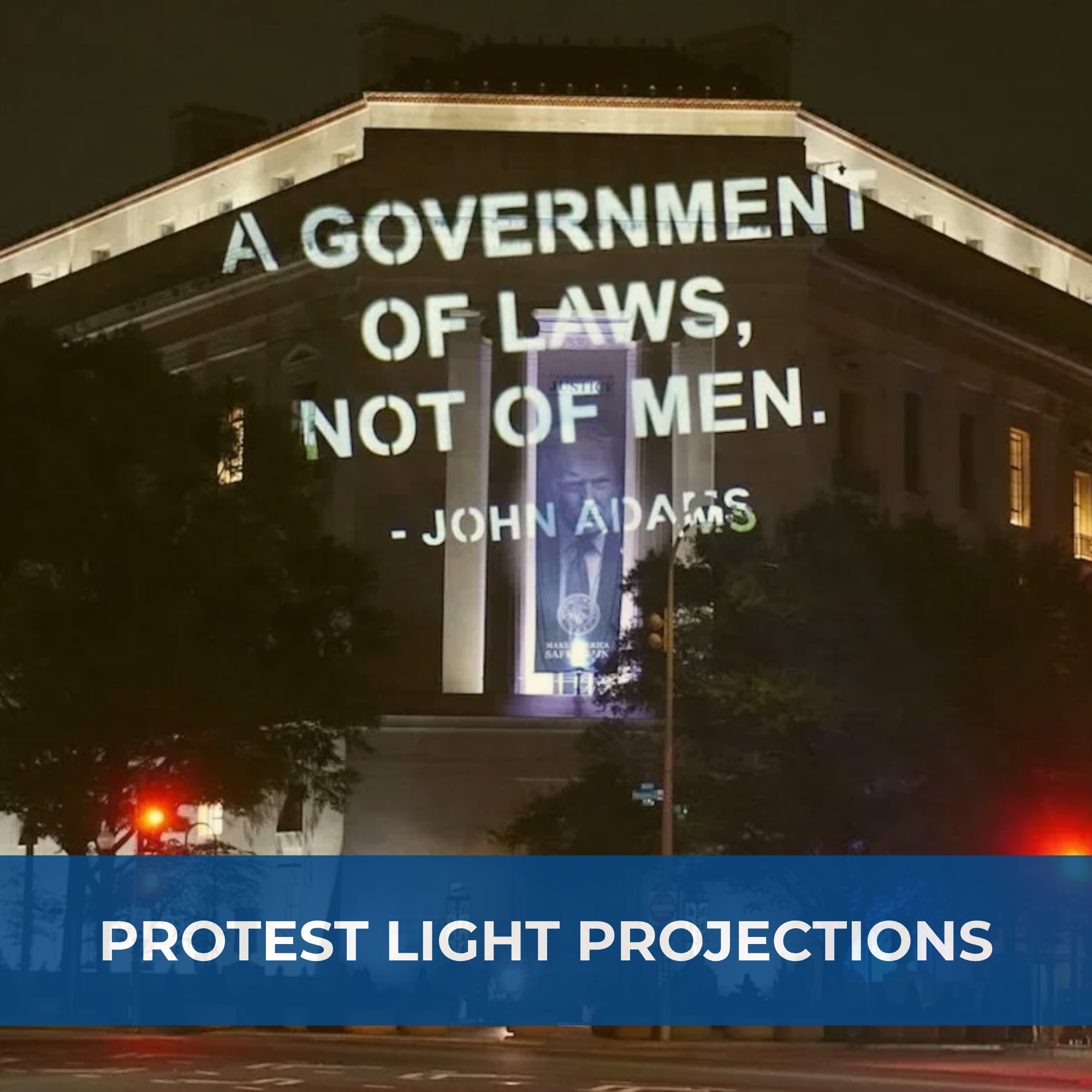
Projecting Protest Slogans with Light Projector
Projecting high-lumen slogans onto buildings creates unmissable public statements that attract media coverage and pressure decision-makers without blocking access.
Learn More →
Producers’ Boycott
Supply Chain Block: Truckers or suppliers collectively refuse shipments to agencies or companies complicit in authoritarian actions.
Learn More →
Peacefully Taking & Holding a Space
Peacefully taking and holding a space to highlight injustice or deny abusive power access.
Learn More →
Real World Actions That Match the Abuse Library
Real World Actions that Match Abuse Library
- A-074 — Shadow Decision-Making Channels: Informal/private channels used to make binding decisions beyond oversight.
- A-076 — Ethics Waiver Abuse: Blanket or unjustified exemptions that gut conflict-of-interest safeguards.
- A-085 — Visitor Logs/Meeting Disclosure Evasion: Withholding or circumventing disclosure of meetings with lobbyists/stakeholders.
- A-094 — Notice-and-Comment Sabotage: Curtailing, ignoring, or fabricating public consultation processes.
- A-234 — Fast-Track Permits for Donors: Expedited or favorable permitting for political donors or allies despite legal or environmental deficiencies.
- A-235 — Manipulated Environmental Impact Assessment: Deliberately altering, suppressing, or fabricating findings in an Environmental Impact Assessment (EIA/ESIA) to hide real harms or make a project appear safe.
- A-237 — Protected Area Degazettement for Private Gain: Removing or shrinking protected status to enable extractive or real-estate projects.
- A-239 — Corrupt Mining License Awards: Awarding mining rights without transparency or competition to cronies or shell firms.
- A-243 — Hazardous Waste Dumping Tolerated: Allowing illegal dumping or improper disposal of hazardous waste without enforcement.
- A-245 — Sacrifice-Zone Routing: Choosing routes that concentrate harms on marginalized or politically weak communities.
- A-246 — Indigenous Land Rights Violations: Approving projects without free, prior, and informed consent of affected Indigenous peoples.
- A-247 — Over-Allocation of Water Rights: Issuing withdrawals exceeding sustainable yields or harming downstream ecosystems/users.
- A-252 — Environmental Prosecutorial Capture: Declining or soft-pedaling cases due to industry pressure or political influence.
- A-255 — Sham Environmental Consultation: Conducting perfunctory or manipulated consultation with predetermined approvals.
- A-418 — Pipeline Integrity Neglect / Leak Cover-Up: Failing to inspect/repair pipelines and concealing leaks or risk indicators.
- A-419 — Water Treatment Failure / Contaminant Concealment: Allowing unsafe contaminants (e.g., lead, PFAS, pathogens) and hiding test results or noncompliance.
- A-430 — Infrastructure Redlining / Unequal Service Quality: Systematically underinvesting in marginalized areas, causing worse reliability and quality.
- A-515 — Critical Infrastructure Law Overreach: Criminalizing peaceful protest near infrastructure through vague, overbroad statutes.
- A-554 — SLAPPs aligned with officials to silence critics: Corporations coordinate with state actors to file punitive suits against journalists/activists.
Sources
- ACLU — https://www.aclu.org/campaigns-initiatives/stand-with-standing-rock
- ACLU-2 — https://www.aclu.org/press-releases/new-report-finds-nevadas-lithium-mine-permit-violates-indigenous-peoples-rights
- ACLU South Dakota — https://www.aclusd.org/press-releases/aclu-asking-united-nations-investigate-desecration-sacred-black-hills-indigenous/
- American Academy of Arts and Sciences — https://www.amacad.org/publication/daedalus/indigenous-historical-trauma-alter-native-explanations-mental-health-inequities
- American Indian Magazine — https://www.americanindianmagazine.org/story/indigenous-rights-of-nature
- Amnesty International — https://www.amnesty.org/en/latest/news/2026/05/usa-boom-in-lithium-mining-across-nevada-is-violating-the-rights-of-indigenous-peoples/
- Amnesty International-2 — https://www.amnesty.org/en/latest/news/2023/12/canada-amnesty-criminalization-surveillance-wetsuweten-land-defenders/
- AP News — https://apnews.com/article/mining-lithium-nevada-thacker-rosemont-decision-c7e251ef3994dfea4f2dff58322ff4ac
- BBC — https://www.bbc.com/news/technology-67028209
- Becket Fund — https://becketfund.org/case/apache-stronghold-v-united-states/
- Berkeley Political Review — https://bpr.studentorg.berkeley.edu/2021/07/10/the-lasting-harms-of-toxic-exposure-in-native-american-communities/
- BlackRock's Big Problem — https://blackrocksbigproblem.com/the-problems/rights-violations/
- Business and Human Rights Resource Centre — https://www.business-humanrights.org/en/latest-news/usa-native-american-tribes-file-lawsuit-challenging-the-approval-of-thacker-pass-lithium-mine-alleging-inadequate-consultation/
- Business and Human Rights Resource Centre-2 — https://www.business-humanrights.org/de/neuste-meldungen/resolution-copper-lawsuit-re-land-swap-of-notable-area-usa/
- Business and Human Rights Resource Centre-3 — https://www.business-humanrights.org/en/latest-news/australia-rio-tinto-mining-blast-destroys-ancient-aboriginal-sacred-site/
- Center for Biological Diversity — https://biologicaldiversity.org/w/news/press-releases/trump-administration-to-hand-arizonas-oak-flat-to-mining-giant-following-appeals-court-ruling-2026-03-13/
- Center for Biological Diversity-2 — https://biologicaldiversity.org/w/news/press-releases/lawsuit-challenges-federal-approval-of-harmful-oil-exploration-in-alaskas-western-arctic-2025-12-11/
- Chicago Law Review — https://lawreview.uchicago.edu/print-archive/partially-tribal-land-case-limiting-state-eminent-domain-power-under-25-usc-ss-357
- Citizens for Responsibility and Ethics in Washington (CREW) — https://www.citizensforethics.org/reports/interior-department-shadow-calendars/ [Note: appeared twice in original list with same URL; consolidated to one entry]
- Cornell Law — https://www.law.cornell.edu/uscode/text/25/321
- Department of Interior — https://www.doi.gov/ocl/hearings/113/hr1587andhr4293_062014
- Dunbar-Ortiz, Roxanne — An Indigenous Peoples' History of the United States. Beacon Press, 2015. ISBN: 978-080705783-4 [Book — no URL]
- E&E News — https://www.eenews.net/articles/biden-admin-offers-2b-loan-for-thacker-pass-lithium-project/
- EarthJustice — https://earthjustice.org/brief/2021/biden-delivers-disappointment-on-the-dakota-access-pipeline
- EarthRights International — https://earthrights.org/media_release/water-protectors-prevail-in-line-3-blockade-case/
- Federal Permitting Improvement Steering Council — https://www.permitting.gov/newsroom/press-releases/year-one-trump-administration-fast-41-accomplishments
- Federal Register / Bureau of Land Management — https://www.federalregister.gov/documents/2026/05/12/2026-09386/rescission-of-conservation-and-landscape-health-rule
- Federal Register / Bureau of Land Management-2 — https://www.federalregister.gov/documents/2026/05/11/blm-public-lands-rule-rescission
- Friends Committee on National Legislation — https://www.fcnl.org/updates/2016-09/native-american-trust-fund-massive-mismanagement
- Giacomini — [Book] ISBN: 9783031095085 [No URL — print publication]
- Government Accountability Office (GAO) — https://www.gao.gov/products/gao-26-109034
- Grand Canyon Trust — https://www.grandcanyontrust.org/blog/arizona-governor-urges-review-grand-canyon-uranium-mine/
- Grist — https://grist.org/indigenous/report-nevadas-lithium-boom-comes-at-the-expense-of-indigenous-rights/
- Harvard School of Public Health — https://hsph.harvard.edu/news/fossil-fuel-extraction-harming-indigenous-communities/
- High Country News — https://www.hcn.org/articles/justice-deferred-tribal-pollution-cases/
- Human Rights Watch — https://www.hrw.org/world-report/2025/country-chapters/united-states
- Human Rights Watch-2 — https://www.hrw.org/report/2025/02/06/the-land-of-our-people-forever/united-states-human-rights-violations-against-the
- Human Rights Watch-3 — https://www.hrw.org/report/2008/03/30/map/land-and-housing-rights-violations-israels-unrecognized-bedouin-villages
- Inside Climate News — https://insideclimatenews.org/news/03052026/america-lithium-rush-tribal-rights/
- Internal Revenue Service (IRS) — https://www.irs.gov/government-entities/indian-tribal-governments/fraud-and-abusive-schemes-information-for-indian-tribal-governments
- International Center for Not-for-Profit Law (ICNL) — https://www.icnl.org/usprotestlawtracker/
- Kellner (ScienceDirect) — https://www.sciencedirect.com/science/article/pii/S2214629625001781
- Lithium Harvest — https://lithiumharvest.com/sustainability/
- Mashfy et al. (ScienceDirect) — https://www.sciencedirect.com/science/article/pii/S2949821X25002418
- MDPI / Water Journal — https://www.mdpi.com/2073-4441/18/6/741
- Mctlaw — https://www.mctlaw.com/indian-law/federal-class-action-tribal-landowners-denied-oil-gas-payments/
- Mongabay — https://news.mongabay.com/2025/12/top-10-indigenous-news-stories-that-marked-2025/
- National Library of Medicine — https://pmc.ncbi.nlm.nih.gov/articles/PMC5429369/
- National Parks Conservation Association (NPCA) — https://www.npca.org/articles/11370-revoking-chaco-canyon-protections-would-risk-a-thousand-years-of-history
- National Parks Conservation Association (NPCA)-2 — https://www.npca.org/articles/5327-why-do-we-need-mining-law-reform
- National Wildlife Federation — https://www.nwf.org/Home/Latest-News/Press-Releases/2026/3-16-2026-Transfer-of-Oak-Flat-Causes-Harm-to-Indigenous-Peoples
- Native American Rights Fund (NARF) — https://narf.org/cases/bears-ears/
- Native American Rights Fund (NARF)-2 / Native News Online — https://www.narf.org/nill/bulletins/news/2026/land.html
- Phoenix New Times — https://www.phoenixnewtimes.com/news/apache-oak-flat-resolution-copper-land-swap-looming-11524316
- POLITICO Pro — https://subscriber.politicopro.com/article/eenews/2026/04/28/feds-failed-to-oversee-oklahoma-oil-leases-tribal-members-say-00894830
- Project on Government Oversight (POGO) — https://www.pogo.org/reports/toxic-legacy-indigenous-lands
- Project on Government Oversight (POGO)-2 — https://www.pogo.org/reports/ethics-waiver-abuse-federal-lands
- Public Citizen — https://www.citizen.org/news/congress-strips-minnesota-boundary-waters-of-mining-pollution-protections/
- Sabin Center for Climate Change Law — https://www.climatecasechart.com/document/energy-transfer-equity-l-p-v-greenpeace-international_82fd
- Sierra Club — https://www.sierraclub.org/sites/default/files/sce/north-star-chapter/pdf/TreatRightsFactSheet.pdf
- TGS — https://www.tgs.com/well-and-subsurface-intel/03-16-2023
- The Conversation — https://theconversation.com/rio-tinto-just-blasted-away-an-ancient-aboriginal-site-heres-why-that-was-allowed-139466
- The Guardian — https://www.theguardian.com/us-news/2016/oct/31/dakota-access-pipeline-protest-investigation-human-rights-abuses
- The Guardian-2 — https://www.theguardian.com/us-news/2026/may/10/south-dakota-sioux-oil-pipeline
- The Intercept — https://theintercept.com/2023/03/22/oak-flat-mine-arizona-biden/
- UCLA Institute of the Environment — https://www.ioes.ucla.edu/project/impacts-of-oil-and-gas-development-on-native-communities-in-new-mexico/
- UN Special Rapporteur on Indigenous Peoples — https://unsr.jamesanaya.org/?p=543
- United Nations Human Rights Office (OHCHR) — https://www.ohchr.org/en/statements/2026/05/un-special-rapporteur-indigenous-peoples-usa-visit
- United Nations News — https://news.un.org/en/story/2011/09/387482
- United Nations Permanent Forum on Indigenous Issues — https://www.un.org/esa/socdev/unpfii/documents/EGM12_carmen_waghiyi.pdf
- University of Colorado Law Review — https://lawreview.colorado.edu/print/volume-96/abandoned-mines-abandoned-treaties-the-federal-governments-failure-to-remediate-abandoned-uranium-mines-on-the-navajo-nation-nadine-padilla/
- U.S. Commission on Civil Rights — https://www.usccr.gov/files/pubs/2018/12-20-Broken-Promises.pdf [Note: appeared twice in original list with same URL; consolidated to one entry]
- Utah Law Review — https://dc.law.utah.edu/ulr/vol1981/iss3/5/
- Western Priorities — https://westernpriorities.org/2026/01/top-interior-official-faces-corruption-allegations-over-thacker-pass-water-deal/
- World Oil — https://www.worldoil.com/news/2026/2/20/gop-investigates-environmental-groups-opposing-alaska-s-willow-oil-project/
- World Resources Institute — https://www.wri.org/insights/indigenous-and-local-community-land-rights-protect-biodiversity
- WTIP — https://wtip.org/minnesota-supreme-court-rules-against-polymet-says-state-pollution-officials-hid-epa-warnings/
- WWF — https://www.worldwildlife.org/news/stories/recognizing-indigenous-peoples-land-interests-is-critical-for-people-and-nature/
Stay Nonviolent. Coordinate Strategically. Take Back Your Power.
Stay in the loop
Get updates on civic action, our platform, and how you can get involved.